OVERTON WINDOW
curated by Re:humanism
Presents:
Paolo Bufalini
double blind
12.06.2026
Comunicato stampa | Press release
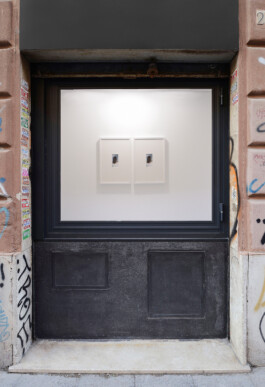
Matèria is delighted to present the fifth chapter of OVERTON WINDOW in its street facing Vitrine. The curated series of small shows aims to cast a spotlight on digital and on-chain art and is developed in collaboration with Re:humanism; the pioneering platform led by Daniela Cotimbo, dedicated to the exploration of the intricate relationship between humanistic and scientific cultures with a special emphasis on the advancements in artificial intelligence research.
OVERTON WINDOW sets out to explore the possibilities stemming from our rapidly evolving symbiotic relationship with technology. The project seeks to champion artists and concepts that illuminate the intersection of art and technology, with the overarching goal to harness the disruptive potential of AI and blockchain technologies, paving the way for new artistic production models. Additionally, OVERTON WINDOW serves as a catalyst for reimagining cultural production, markets and ownership models by providing artists with a platform and a support structure to experiment with the evolving technological landscape.
Presented in curated installments, OVERTON WINDOW features an open ended dialogue between the public and a selection of local and international artists.
The common thread of the project is embodied by the concept of new digital mythologies, a theme that encloses various manifestations of our relationship with the contemporary. If Chatbots, avatars, and voice assistants become new idols, digital simulacra embodying new forms of animism, renewed forms of digital ritual embrace diverse perspectives and suggest new narratives.
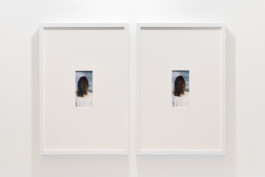
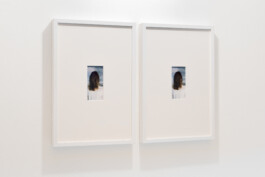
The fifth installment of OVERTON WINDOW presents a new installation by Italian artist Paolo Bufalini, titled double blind.
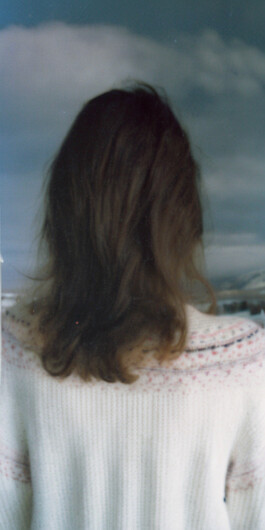
The work consists of two images from the Rückenfiguren series (2024–ongoing), which Bufalini develops from the Romantic motif of the Rückenfigur: a figure seen from behind and turned toward a mysterious and inaccessible elsewhere.
The two portraits, which allude to the artist’s personal and family memories, reveal themselves upon closer inspection as synthetic images. They were produced by retraining generative AI models using scanned and digitized photographs from the artist’s family albums.
By incorporating traces of time such as scratches, dust, and imperfections typical of amateur analog photography, the new generative models produce a distinctive aesthetic, a hybrid language between the encyclopedic visual imaginary embedded in the model and a circumscribed, intimate, and emotionally dense visual paradigm.
The play of doubling also contributes to reinforcing the semantic ambiguity of these images, projecting them beyond technical reproducibility and photographic indexicality, toward an as yet inaccessible territory made of statistical representations, memories, and collective beliefs.