Leonardo Zappalà
Luci di Via
12.09.2026
Comunicato stampa | Press release
Testo critico
On the occasion of the fourth edition of San Lorenzo Gallery Night, the neighborhood’s traditional shared gallery opening event, Matèria inaugurates its new exhibition season with Luci di via. Conceived by Giuliana Benassi, the project has over the years become Matèria’s regular opening event for its annual program.
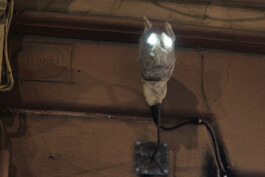
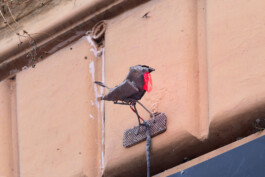
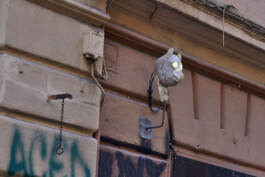
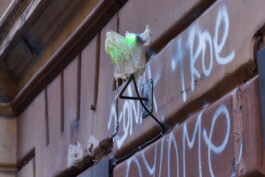
Luci di via renews the light-based intervention that unfolds along the gallery’s exterior perimeter. Alongside the site-specific installations, which remain active for an entire year, the project presents a single work by an invited artist. Each year, the work is installed either within the gallery spaces or, as in this edition, in the street-facing window.
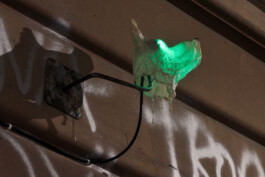
For the 2026 edition, Giuliana Benassi invites Leonardo Zappalà to create an intervention spanning the public dimension and the gallery’s exterior light installation. This year’s project explores, through animal figures, the symbolic and magical value of transformation. The title Bestie (la notte son botte) alludes to the metaphorical boundary separating night from day, the human from the animal, exploring that suspended space which characterizes the passage into another state; one that eludes definition.
The space of the gallery’s street facing Vitrine, developed in dialogue with Federica Roppo, a Rome-based curator, becomes the setting for the tragicomic plunge of the artist’s guardian angel. Captured at the moment when its waist touches a swamp-like surface scattered with crystals, the figure evokes a metaphor for the fragmentation of the body and the struggle to maintain self-control.
This edition renews Luci di via’s vocation as a space open to the formation of new perspectives, bringing Leonardo Zappalà’s artistic research into dialogue with the curatorial practice of Federica Roppo, both part of a new generation active within Rome’s contemporary art scene. The decision to place an emerging curatorial perspective alongside an artistic one reflects the shared approach of Matèria and Giuliana Benassi, who conceive the project as a space for research and experimentation, deeply rooted in the fabric of the city and in the people who move through it.